How to improve your brand's AI search visibility: 8 checks to start with
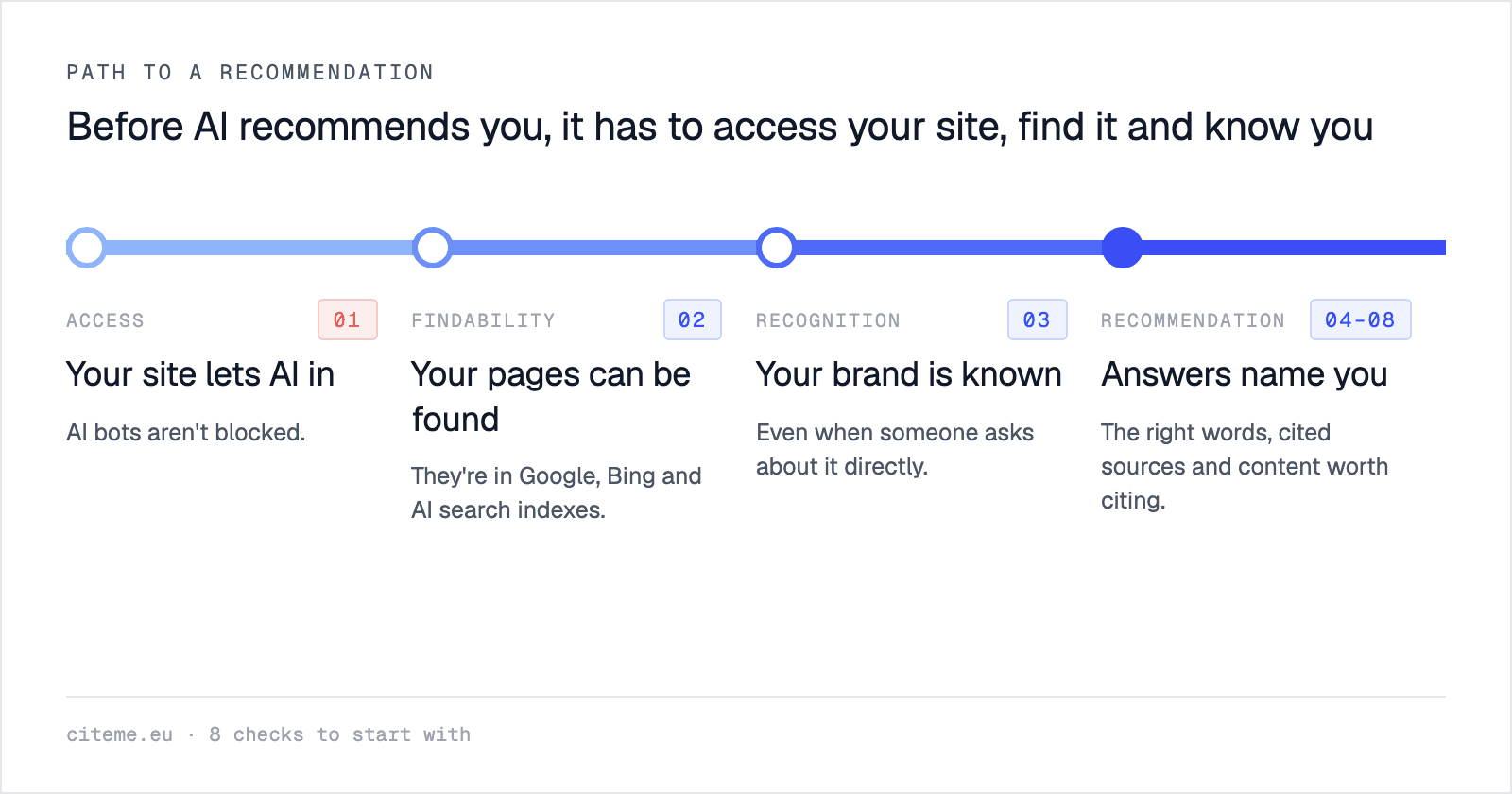
When people ask ChatGPT, Gemini or Perplexity for a recommendation, AI names only a few brands. These eight checks are a good place to start: what to look at first, and what usually helps. You can do each one by hand, or faster with citeme.eu.
1. Make sure AI can access your website
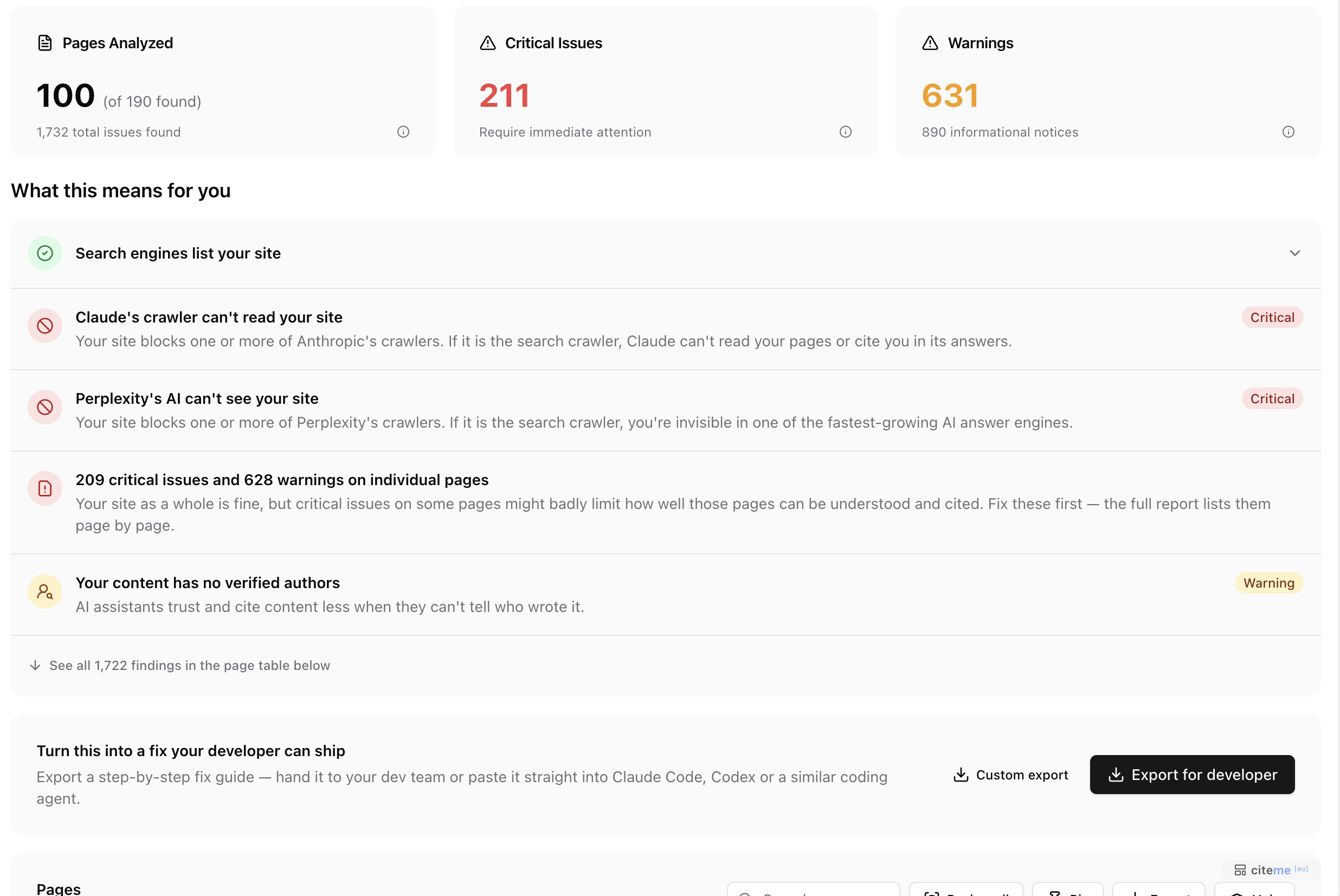
Many websites block AI assistants without the owner knowing, through security settings at the hosting or the robots.txt file. It was the main problem in the analysis citeme.eu conducted. ChatGPT or Perplexity then can't access your pages, however good they are. Allow the bots AI uses to search first, then the ones that visit a page when someone asks about it in a chat. Whether to allow bots that collect training data is your decision.
2. Make sure AI can find your pages
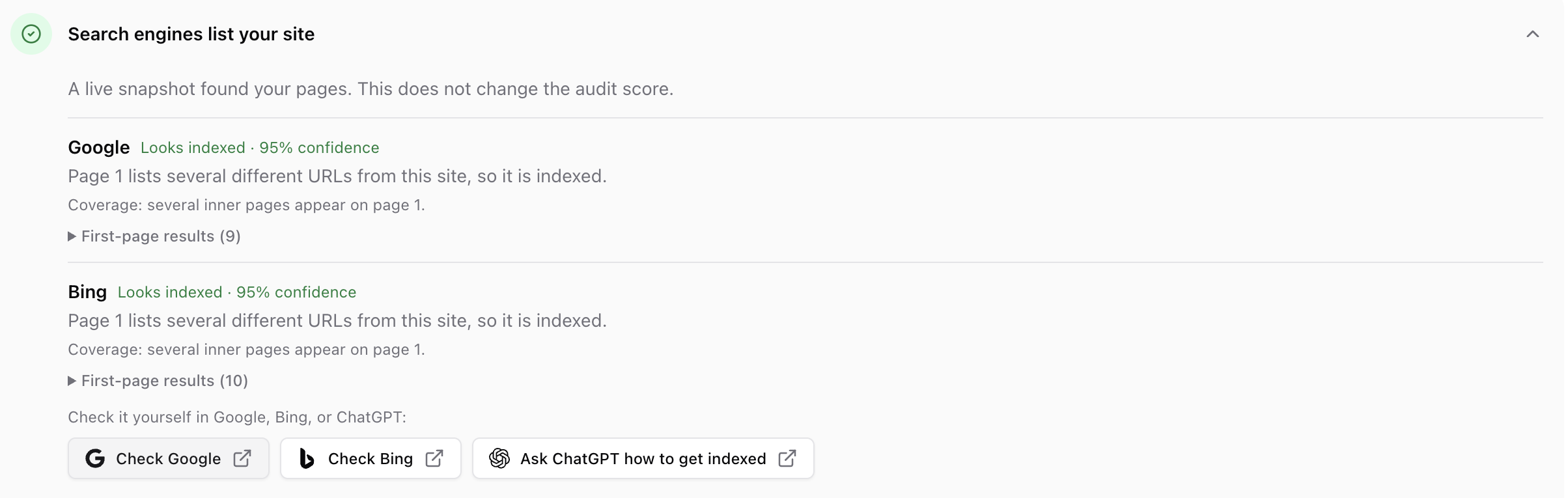
A page that isn't indexed can't be found, by people or by AI. Gemini and Google AI Mode build on Google's index and Microsoft Copilot on Bing's, and AI assistants also look things up through AI search services such as Perplexity, Exa and Tavily. If your pages are missing there, no rewrite will help.
- The Site audit checks Google, Bing, Perplexity, Exa and Tavily in one go, and shows whether they list your inner pages or only your homepage. Re-run it any time after a fix.
- AI bot activity shows which of your pages AI bots actually visited and which they've missed so far.
3. Check that AI knows who you are
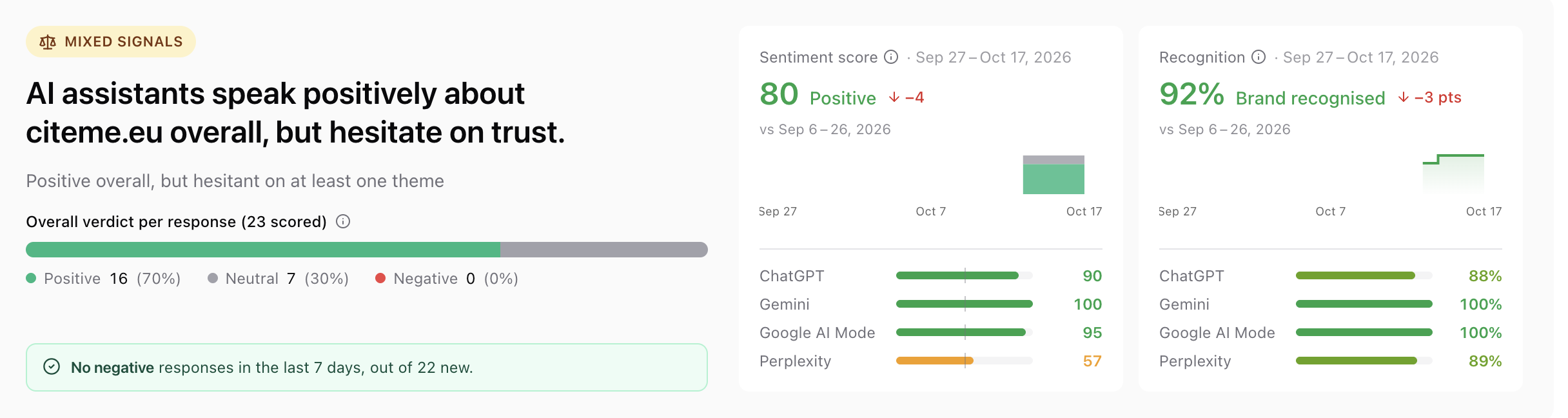
Before AI recommends you, it has to know you. Ask “What is X?” or “X pros and cons”. If AI confuses you with another company, doesn't know you, or gets your offer wrong, indexing (check 2) and mentions on other sites (check 7) help most. Expect weeks, not days.
- On the Brand Profile page, recognition per assistant: how often AI knew you when asked by name.
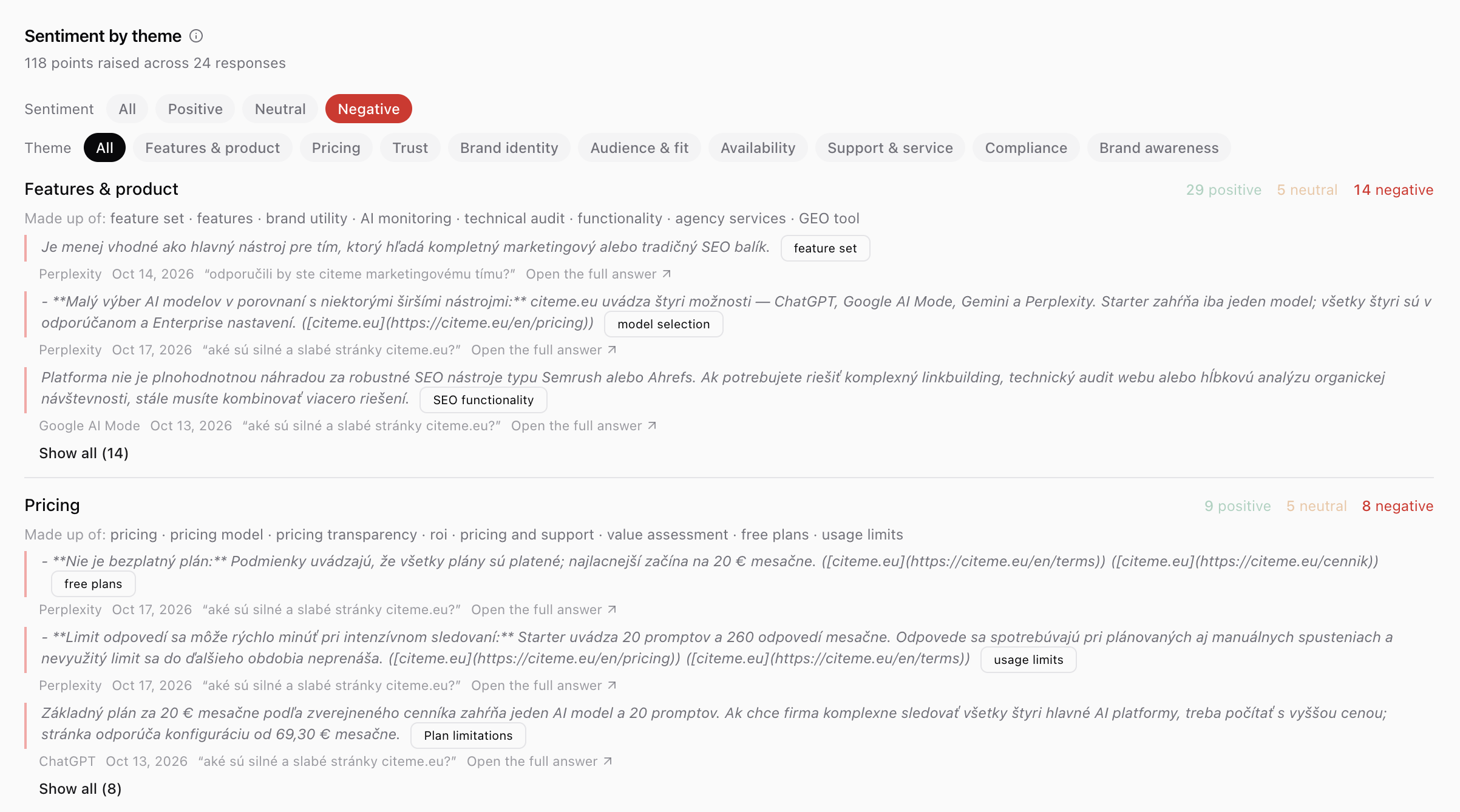
- What AI says about you, split into themes such as trust, pricing and features, with the exact sentences behind each.
- The sources AI used when describing you.
4. Find out whether AI recommends you
This is your AI search visibility: does AI name you when a customer who doesn't know you yet asks, for example, “best invoicing tool for a small business”? Answers vary from one run to the next, so one missed answer means little. Look for the pattern over many runs.
- Suggests questions from your website, for your market and language.
- Asks every assistant on a schedule, without any chat history, the way a new customer would. You don't need accounts of your own.
- Reads every answer: which brands it names and in what order, how it describes you, which pages it cites and what the AI searched for.
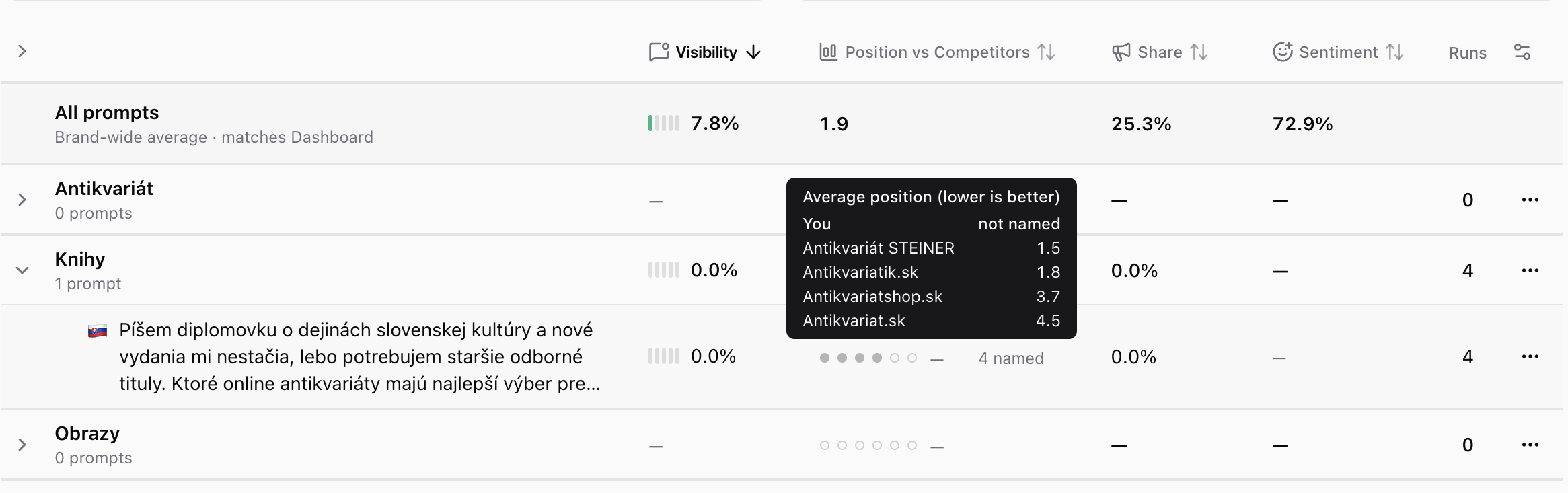
- Shows your visibility, share of voice and position per assistant and over time, next to your competitors.
- With personas, shows how answers change for, say, a freelancer and a large company.
5. Learn why AI picks your competitors
When AI names a competitor instead of you, the reason is usually on the pages it read while answering. Find out which pages it cited, whether they mention the competitor and not you, and how the competitor's own page describes the offer compared with yours. That tells you whether to fix your page (check 6) or get onto the pages AI reads (check 7).
6. Use the words AI searches for
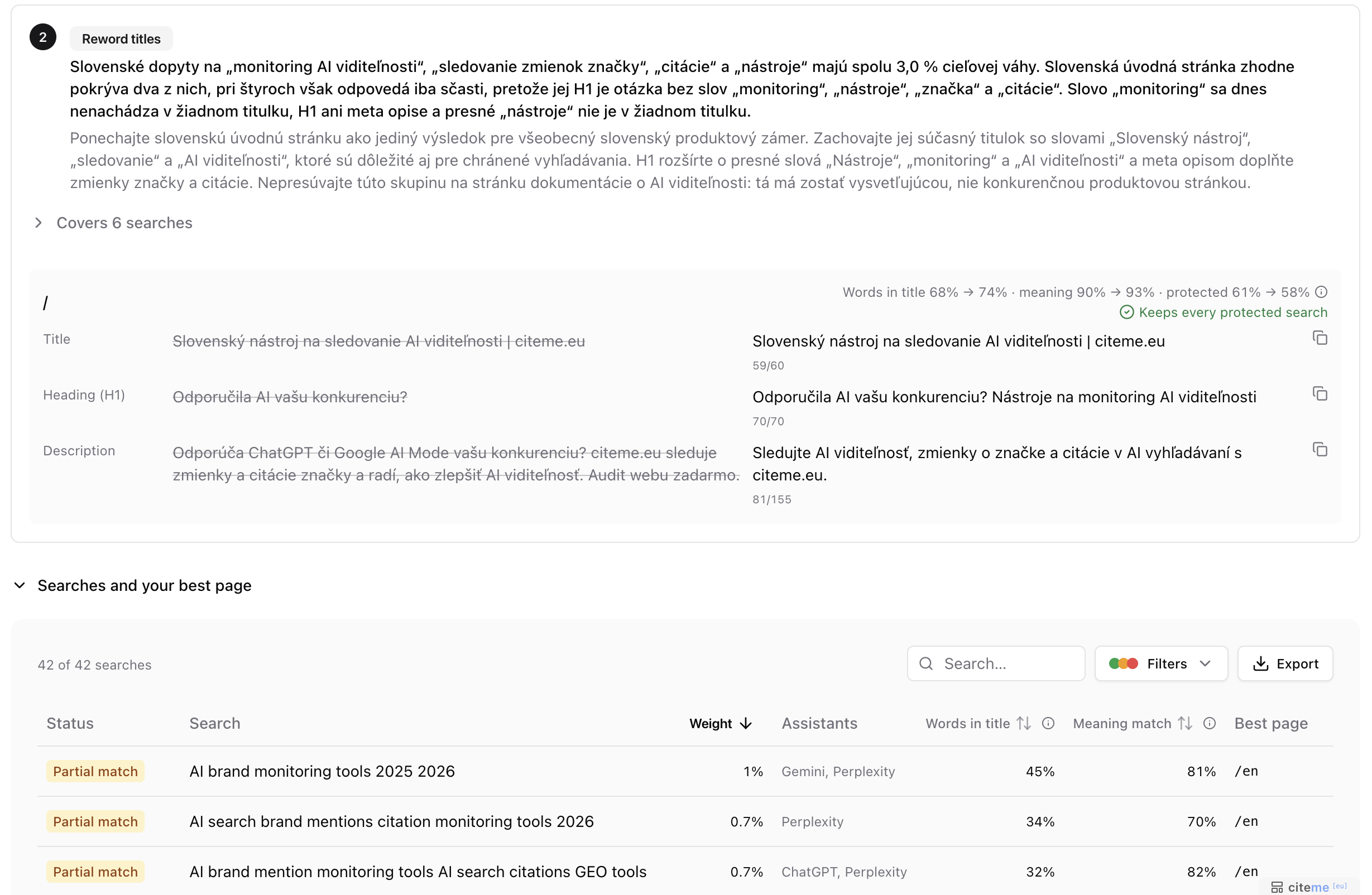
Before answering, AI runs its own web searches, and they work much like a classic search engine. Pages whose titles, headings and descriptions use the searched words get found. AI doesn't always search in the customer's language either. It often searches in English even when asked in Slovak, as we showed in Why Slovak companies have a harder time in AI search.
7. Be where AI actually searches
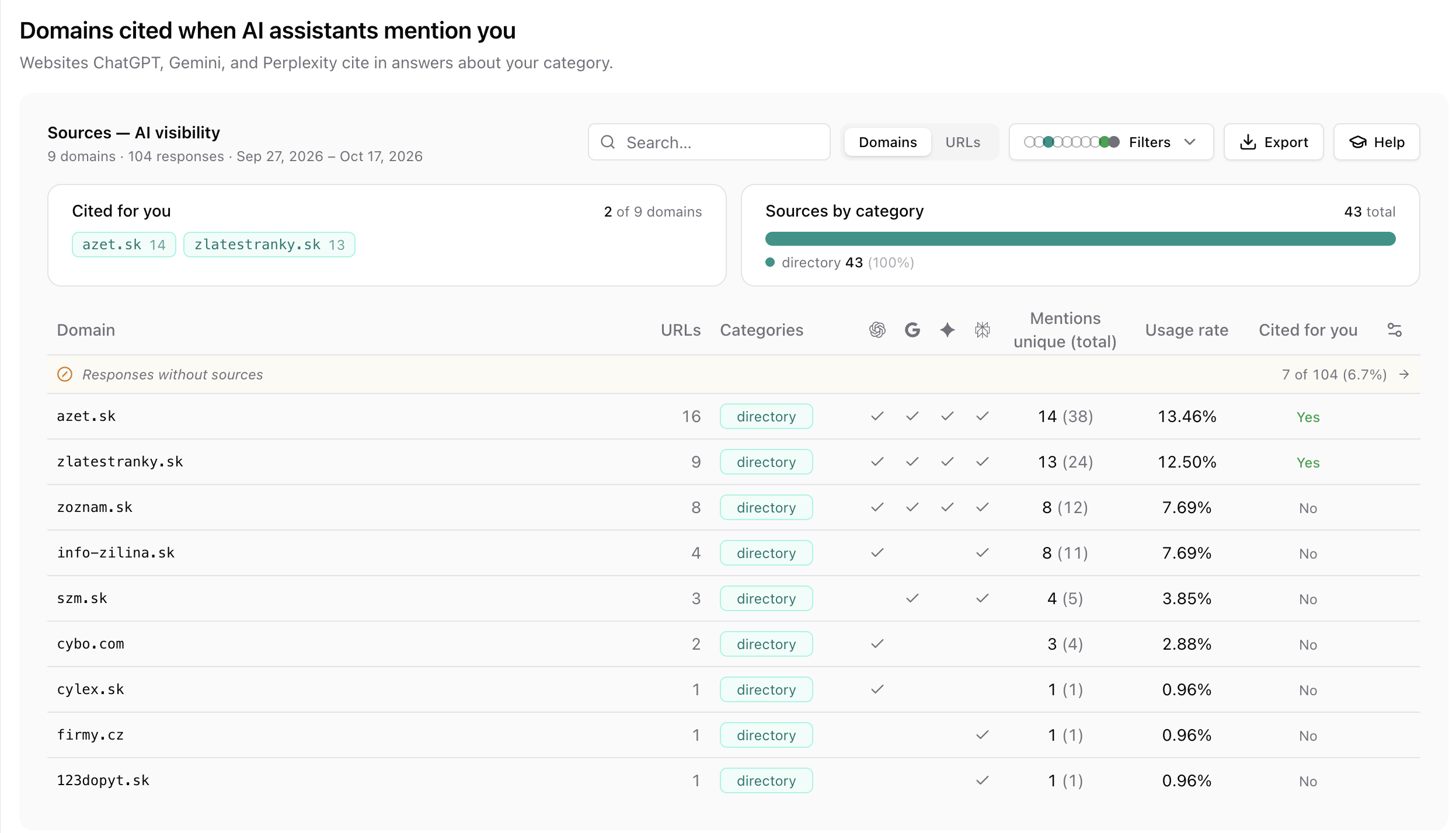
AI builds many answers from other sites: directories, review sites, comparison articles and forums. Which of them matter depends on your field, as we measured in Where is it worth being for AI to find you? Create profiles on the ones that come up for your questions, with the same name and description as on your site. Contact authors of comparisons that leave you out, and join discussions openly, as someone from the company.
- Cited sources collects every site AI cited across all your prompts and sorts them into categories such as Directory, Community and News, so you see where to get listed first.
- Citation X-ray then reads those pages for a single prompt: which brands they mention, why AI uses them, and how your page compares.
8. Make your content worth citing
AI tends to cite pages that answer the question clearly and give concrete facts. Say plainly what you offer, for whom and at what price. Show who you are, how to reach you, and references a customer can verify. Write for customers, not for search bots, and keep it up to date. If AI hesitates about something, such as price or trust, that's usually the missing piece.
- The Brand Profile page lists the themes AI hesitates on, each with a recommended action.
- Content review scores any page, or a draft before you publish it, against Google's and Bing's guidance for AI answers: originality, clarity, verifiability and whether it's written for people. It then checks the page against all your prompts, so you see which questions it answers.
Frequently asked questions
Why does AI never link to my website?
Usually because AI assistants can't access your site, or your pages aren't indexed, so AI has nothing of yours to cite. Checks: 1, 2
Why doesn't AI know my brand, even when I ask about it directly?
AI can only learn about you from pages it can access and find, so start there. If those are fine, your brand is probably new, or few other sites mention it yet. That takes weeks to change. Checks: 1, 2, 3, 7
Why does AI mention me only when my name is in the question?
AI knows you, but either doesn't connect you with what you sell or prefers better-known competitors. Your pages may not use the words AI searches for, you may be missing from the pages it reads, or your competitors simply have a stronger reputation: more reviews, more mentions and a longer history. Checks: 5, 6, 7
Why does AI recommend my competitors first?
They usually appear on more of the pages AI reads, or their pages match its searches better. Find out which it is before you change anything. Checks: 5, 6, 7
Why does AI mention me, but not recommend me?
AI usually won't recommend you if something important is missing or unclear in the sources it reads: your price, who you are, what exactly you do, or what others say about you. Your own pages should answer the first three, reviews and other sites the last. Checks: 3, 7, 8
Why am I mentioned one day and gone the next?
AI answers vary from run to run, and a brand that AI only loosely connects with a topic drops in and out. The goal is to be mentioned every time. Judge the trend over many runs, then make your pages and other sites tie you to the topic more clearly. Checks: 4, 6, 7